Are you a dedicated PC gamer seeking an edge, or perhaps struggling with wrist pain from traditional mice? The world of gaming demands precision, speed, and comfort, and while conventional gaming mice dominate the market, an intriguing alternative is gaining traction: the trackball gaming mouse. Far from a relic of the past, modern trackball mice designed for gaming offer a unique blend of ergonomic benefits and competitive features that could redefine your play. Let’s dive deep into this specialized peripheral and discover if a trackball gaming mouse is your next game-changer.
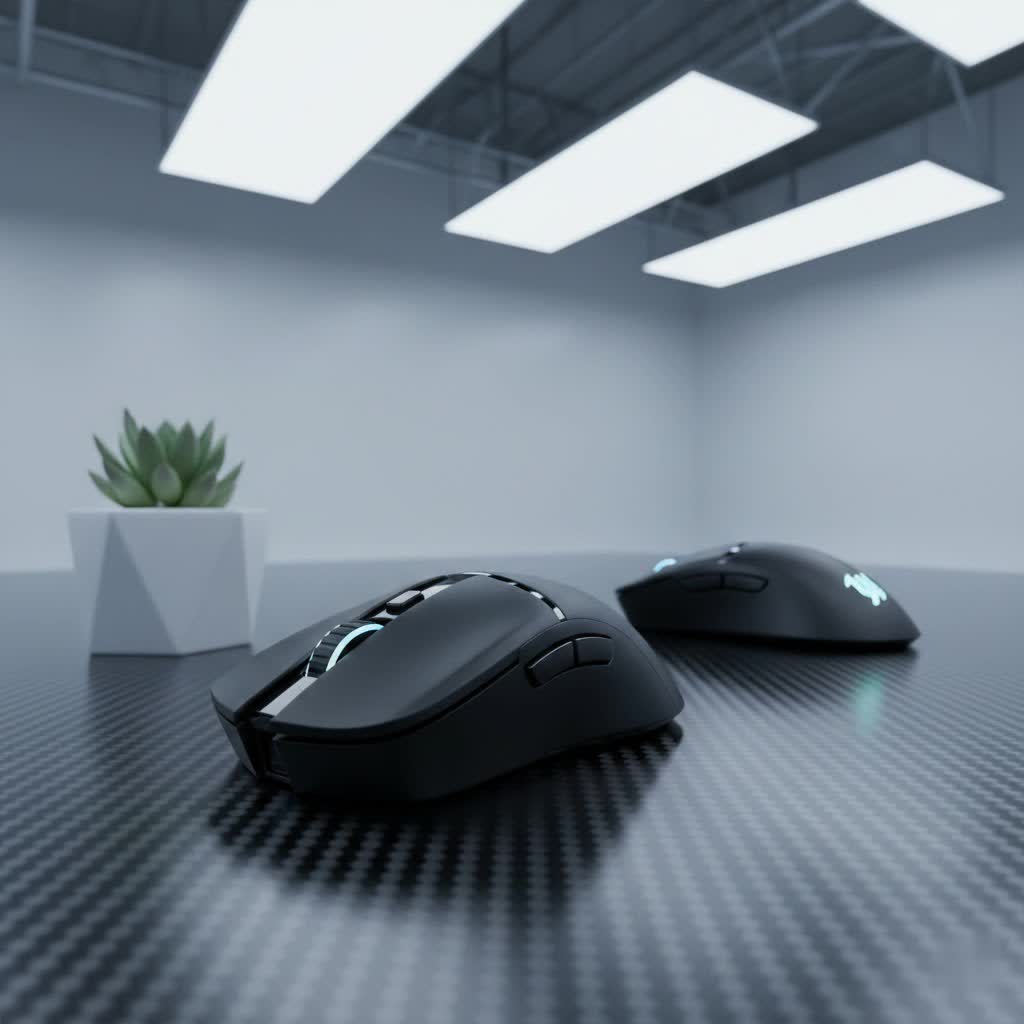
Gaming Trackball: An Overview
What is a Trackball Gaming Mouse? Why Do They Matter?
|
Our Picks for the Best Gaming Mouse in 2026
As an Amazon Associate I earn from qualifying purchases.
|
||
| Num | Product | Action |
|---|---|---|
| 1 | Razer Viper V3 Pro Wireless Esports Gaming Mouse: Symmetrical - 54g Lightweight - 8K Polling - 35K DPI Optical Sensor - Gen3 Optical Switches - 8 Programmable Buttons - 95 Hr Battery - Black |

|
| 2 | Redragon M612 Predator RGB Gaming Mouse, 8000 DPI Wired Optical Mouse with 11 Programmable Buttons & 5 Backlit Modes, Software Supports DIY Keybinds Rapid Fire Button |
|
| 3 | MechLands AJAZZ AJ139P V3 MC Wireless Mouse with Charging Base, 3 Modes Gaming Mouse with 800mAh Battery, Adjustable 24,000 DPI, PAW3311 Sensor, 1000 Polling Rate, 69g Lightweight, Win/Mac (Black) |
|
| 4 | Logitech G502 Hero High Performance Wired Gaming Mouse, Hero 25K Sensor, 25,600 DPI, RGB, Adjustable Weights, 11 Buttons, On-Board Memory, PC/Mac |
|
| 5 | Razer Basilisk V3 X HyperSpeed Customizable Wireless Gaming Mouse: Mechanical Switches Gen-2-5G Advanced 18K Optical Sensor - Chroma RGB 9 Programmable Controls 535 Hr Battery Classic Black |
|
| 6 | Logitech G PRO X Superlight Wireless Gaming Mouse, Ultra-Lightweight, Hero 25K Sensor, 25,600 DPI, 5 Programmable Buttons, Long Battery Life, Compatible with PC/Mac - Black |
|
| 7 | Razer Basilisk V3 Customizable Ergonomic Gaming Mouse: Fastest Gaming Mouse Switch - Chroma RGB Lighting - 26K DPI Optical Sensor - 11 Programmable Buttons - HyperScroll Tilt Wheel - Classic Black |
|
| 8 | Razer DeathAdder Essential Gaming Mouse: 6400 DPI Optical Sensor - 5 Programmable Buttons - Mechanical Switches - Rubber Side Grips - Classic Black |
|
| 9 | MAMBASNAKE ATTACKSHARK V8 Wireless Ultralight Gaming Mouse with 8K Polling,42000 DPI,Nordic54L15 MCU Chip,PAW3950 Max Sensor-Wired/BT/2.4Ghz,400Hrs Long Battery,Programmable for PC Mac FPS(White+Tape) |
|
| 10 | Logitech G305 Lightspeed Wireless Gaming Mouse, Hero 12K Sensor, 12,000 DPI, Lightweight, 6 Programmable Buttons, 250h Battery Life, On-Board Memory, PC/Mac - Black |
|
A trackball gaming mouse fundamentally redefines cursor control. Unlike a traditional mouse that you slide across a surface, a trackball remains stationary, and you manipulate a built-in ball with your thumb or fingers to move the cursor. This distinct design is crucial because it eliminates large arm and wrist movements, offering a unique approach to precision and comfort. For gamers, this can mean reduced fatigue during extended sessions and a potentially smoother, more stable aiming experience without requiring ample desk space.
Why Consider a Trackball for Gaming?
The primary allure of a trackball for gamers lies in its ergonomic advantages. Constant wrist and arm movements associated with conventional mice can lead to Repetitive Strain Injuries (RSI), carpal tunnel syndrome, or general discomfort. A trackball allows your hand and wrist to remain in a natural, relaxed position, significantly reducing strain. Furthermore, the stationary nature of a trackball means it can be used effectively on any surface, no matter how small or uneven, providing consistent performance without the need for a large mousepad. This makes it ideal for compact setups or gaming on the go.
Types of Gaming Trackballs
Trackball mice generally fall into two main categories, distinguished by how you manipulate the ball:
Thumb-Operated Trackballs
Thumb-operated trackballs feature a smaller trackball positioned under your thumb, typically mirroring the button layout of a traditional mouse with left and right clickers and a scroll wheel accessible by your fingers.
- Description: These designs often present a more familiar feel for users transitioning from a standard mouse, making the learning curve less steep. The thumb takes on the responsibility for cursor movement, while your other fingers are free for primary clicks and scrolling.
- Pros for Gaming:
- Familiarity: Easier adaptation for most new users due to a layout similar to a traditional mouse.
- Dedicated Finger Control: Allows index and middle fingers to focus solely on clicking and scrolling, which can be advantageous in games requiring rapid button presses.
- Compact Design: Often smaller, requiring minimal desk space.
- Cons for Gaming:
- Thumb Fatigue: Intense gaming sessions might lead to thumb strain over time.
- Limited Precision: The smaller ball and single-digit control can sometimes make very fine, micro-adjustments more challenging compared to finger-operated options.
Finger-Operated Trackballs
Finger-operated trackballs place a larger ball in the center or top of the device, controlled by your index, middle, and sometimes ring fingers. The buttons are typically located on either side of the ball.
- Description: These trackballs demand a more significant adjustment period but offer potentially greater control due to the involvement of multiple fingers on a larger ball. Many finger-operated models feature ambidextrous designs.
- Pros for Gaming:
- Enhanced Precision: The larger ball allows for more fluid, granular control with multiple fingers, which some users find superior for broad movements and fine aiming.
- Ambidextrous Options: Many models are designed for both left and right-handed users.
- Reduced Thumb Strain: Distributes the movement workload across multiple fingers.
- Cons for Gaming:
- Steeper Learning Curve: Requires considerable practice to master, as it’s a very different control scheme than traditional mice.
- Button Access: Depending on the design, some buttons might be less conveniently placed as fingers are primarily occupied with ball manipulation.
- Larger Footprint: Often larger than thumb-operated models, though still stationary.
Trackball Gaming vs. Traditional Gaming Mouse: A Detailed Comparison
Deciding between a trackball and a traditional gaming mouse involves weighing several critical factors that impact your gameplay.
Precision and Accuracy
- Traditional Gaming Mouse: Excels in micro-adjustments and quick, flick-shot precision due to the direct hand-to-sensor movement. Low friction and high IPS (inches per second) are key.
- Trackball Gaming Mouse: Can offer excellent broad tracking and stable aiming because the device doesn’t move. However, achieving precise micro-adjustments, especially in fast-paced FPS games, often requires a steep learning curve and sometimes mouse acceleration to compensate for smaller movements. A dedicated “precision button” on some gaming trackballs can temporarily lock cursor movement for critical shots.
Speed and Responsiveness
- Traditional Gaming Mouse: Designed for speed, boasting very high DPI/CPI ranges (Dots Per Inch/Counts Per Inch) and high polling rates (up to 8000Hz) for instant, raw input.
- Trackball Gaming Mouse: Historically, trackballs had lower DPI and polling rates, making them less responsive for gaming. However, modern gaming trackballs like the GameBall and Ploopy Adept feature gaming-grade sensors, higher DPI (up to 5000 DPI), and 1000Hz polling rates, bringing them closer to traditional gaming mice in terms of raw responsiveness.
Ergonomics and Comfort
- Traditional Gaming Mouse: Requires constant wrist and arm movement, which can lead to fatigue and RSIs over prolonged sessions. Various ergonomic shapes exist, but movement is still central.
- Trackball Gaming Mouse: The stationary nature drastically reduces wrist and arm movement, alleviating strain and preventing RSIs. Your hand rests in a natural, often more upright position. This is arguably the biggest advantage for many users, particularly those with existing discomfort.
Programmable Buttons and Customization
- Traditional Gaming Mouse: Known for a plethora of programmable buttons, often with sophisticated software for macros, key remapping, and RGB customization.
- Trackball Gaming Mouse: While general-purpose trackballs may have fewer buttons, gaming-focused models offer multiple programmable buttons. Some (like Ploopy Adept) support advanced firmware like QMK/VIA for deep customization, while others (like the original GameBall) might lack dedicated software, making DPI switching cumbersome.
Learning Curve
- Traditional Gaming Mouse: Most users are familiar with this input method, making it universally accessible with minimal adaptation.
- Trackball Gaming Mouse: There is a considerable learning curve, especially for those new to trackballs. It can take weeks or even months to develop the necessary muscle memory and precision, with initial experiences often feeling awkward or less precise. Patience and consistent practice are essential.
Maintenance
- Traditional Gaming Mouse: Relatively low maintenance, primarily requiring occasional cleaning of the sensor and mouse feet.
- Trackball Gaming Mouse: Requires regular cleaning (every few days with daily use) as dust and debris can accumulate around the ball’s rollers, leading to sticky or inconsistent movement. The ball is usually easy to pop out for cleaning.
Comparison Table: Trackball Gaming Mouse vs. Traditional Gaming Mouse
| Feature | Trackball Gaming Mouse | Traditional Gaming Mouse |
|---|---|---|
| Movement Style | Stationary device, ball moved by fingers/thumb | Hand/wrist/arm moves the device on a surface |
| Ergonomics | Excellent for wrist/arm health, prevents RSI | Can cause wrist/arm strain, potential for RSI |
| Precision | Good for broad tracking, stable aiming; micro-adjustments require practice | Excellent for micro-adjustments, flick shots, high precision |
| Speed/Responsiveness | Modern models offer high DPI (up to 5000), 1000Hz polling rate | Very high DPI (up to 20,000+), 1000-8000Hz polling rate |
| Learning Curve | Steep, requires significant adaptation | Minimal, widely familiar |
| Space Requirement | Very low, no movement space needed | Requires ample desk space for movement |
| Customization | Good on gaming-specific models (buttons, firmware) | Extensive (buttons, macros, software, RGB) |
| Maintenance | Regular ball/roller cleaning required | Occasional sensor/feet cleaning |
| Ideal For | Ergonomic needs, specific game genres (e.g., strategy), stable aiming, limited space | Fast-paced FPS, competitive esports, high precision demands |
Factors to Consider When Choosing a Gaming Trackball
Selecting the right trackball gaming mouse involves more than just aesthetics. Here are the crucial elements to evaluate:
Sensor Performance
Look for a trackball with a high-performance optical sensor. Key specifications include:
- DPI (Dots Per Inch) / CPI (Counts Per Inch): A higher DPI allows for faster cursor movement with less physical ball rotation. For gaming, aim for at least 1600 DPI, with modern gaming trackballs offering 3000-5000 DPI.
- Polling Rate: This is how often the mouse reports its position to the computer. A 1000Hz (1ms) polling rate is standard for gaming and crucial for responsive input.
- IPS (Inches Per Second) and Acceleration: High IPS ensures the sensor accurately tracks fast ball movements without spinning out. Some trackball users employ mouse acceleration software (like Raw Accel) to fine-tune cursor speed for large movements while retaining precision for small ones.
Ball Size and Smoothness
The trackball itself is the heart of the device.
- Size: Larger balls generally offer more precise control and smoother motion. Smaller balls can be more portable but might feel less fluid.
- Material and Bearings: The ball’s material and the quality of the bearings it rests on (often ruby or ceramic) significantly impact smoothness and glide. High-quality bearings minimize “stiction” (initial resistance to movement).
Button Layout and Programmability
Consider the number and placement of buttons, and the software support available.
- Number of Buttons: Gaming often benefits from additional programmable buttons for macros, weapon switching, or abilities.
- Placement: Ensure buttons are easily accessible without compromising ball control. Thumb-operated trackballs often have a more traditional button layout.
- Software/Firmware: Look for trackballs with robust customization software or open-source firmware (like QMK/VIA) that allows for remapping keys, creating macros, and adjusting DPI settings on the fly.
Ergonomics and Grip Style
This is paramount for long-term comfort and injury prevention.
- Thumb vs. Finger-Operated: Decide which control style feels more natural or addresses your ergonomic needs.
- Hand Size and Shape: Ensure the trackball fits comfortably in your hand, supporting your palm and fingers.
- Ambidextrous Design: If you’re left-handed or prefer to switch hands, an ambidextrous finger-operated design is essential.
- Adjustable Tilt: Some trackballs offer adjustable tilt angles to further customize your hand posture for optimal comfort.
Connectivity
- Wired: Offers the most reliable, lowest-latency connection, and no battery concerns. Ideal for competitive gaming where every millisecond counts.
- Wireless (2.4GHz vs. Bluetooth): 2.4GHz wireless with a dedicated dongle generally offers lower latency than Bluetooth, making it preferable for gaming. Bluetooth is convenient for productivity and multi-device use but can introduce slight delays. Check battery life and whether it supports wired mode while charging.
Build Quality and Durability
A gaming peripheral needs to withstand intense use.
- Materials: Look for durable plastics or robust construction.
- Switches: Gaming-grade switches (e.g., Omron, Kailh) ensure crisp clicks and a long lifespan, measured in millions of clicks.
Top Trackball Gaming Mouse Recommendations
While the trackball market is smaller than traditional gaming mice, a few standout models cater specifically to gamers or offer excellent versatility.
- Ploopy Adept Trackball:
- Highlights: Often hailed as one of the most viable trackballs for competitive gaming. It features a previous-generation gaming sensor, a high 1000Hz polling rate, and extensive customization via VIA/QMK firmware. Available as a DIY kit or pre-assembled, it appeals to enthusiasts who value performance and moddability. Its finger-operated design provides precise control.
- GameBall (Original / Thumb):
- Highlights: Specifically engineered for gamers. The original GameBall is a wired, ambidextrous, finger-operated trackball with a precise optical sensor, gaming-grade switches, and a 1000Hz polling rate. The GameBall Thumb offers a thumb-operated design, up to 5000 DPI, multi-connectivity (wired, 2.4GHz, Bluetooth), and a “precision button” for fine aiming, making it more accessible for new trackball users. While the original lacks dedicated software, its hardware is designed for gaming.
- Elecom Deft Pro / Elecom HUGE:
- Highlights: These finger-operated trackballs are popular for productivity but are often adopted by gamers due to their ergonomic designs and multiple programmable buttons. While their stock sensors and bearings might not be “gaming-grade” out of the box (often requiring bearing upgrades for optimal smoothness), their customizable nature makes them a strong contender for those willing to tinker. They offer high DPI settings and robust software for remapping.
- Logitech MX ERGO:
- Note for Gaming: While an excellent, highly ergonomic thumb-operated trackball for productivity with adjustable tilt and good build quality, its low, fixed polling rate and lower maximum CPI generally make it unsuitable for fast-paced competitive gaming. It’s often reviewed as a top productivity trackball but not a gaming one.
Tips for Mastering Gaming with a Trackball
Transitioning to a trackball for gaming can be a challenging yet rewarding journey. Here are some tips to help you adapt and excel:
- Practice and Patience: The learning curve is steep. Start with slower-paced games or practice modes before jumping into competitive matches. Consistency is key to building new muscle memory.
- Adjust Sensitivity and Acceleration: Experiment with your trackball’s DPI settings and consider using mouse acceleration software to find a sweet spot that allows for both rapid movements and precise aiming. Many professional gamers prefer linear acceleration curves for predictability.
- Customize Buttons and Macros: Leverage all available programmable buttons. Assign common actions, macros, or weapon swaps to easily accessible buttons to streamline your gameplay and compensate for any finger dexterity challenges specific to your trackball’s design.
- Regular Cleaning: Keep your trackball meticulously clean. Dust and debris can quickly degrade performance, leading to inconsistent tracking. Pop out the ball and clean the optical sensor and the small support rollers regularly.
- Pair with a Gaming Keyboard: A high-quality gaming keyboard with programmable keys can further enhance your setup, allowing you to offload some functions from your trackball and optimize your control scheme.
Conclusion
The trackball gaming mouse is undeniably a niche product, but one that offers distinct advantages for a growing segment of the gaming community. From mitigating wrist and arm pain to offering a unique style of precise, stable aim, modern gaming-specific trackballs are proving that innovation in input devices isn’t limited to traditional forms. While the journey to mastery requires patience and adaptation, the ergonomic benefits and refined control can ultimately enhance your gaming experience, allowing for longer, more comfortable sessions. If you’re tired of conventional limitations, a trackball gaming mouse might just be the ergonomic and performance upgrade you never knew you needed.
Are you ready to roll into a new era of gaming comfort and control?
Frequently Asked Questions
Is a trackball mouse good for FPS gaming?
While traditionally not favored for FPS, specialized gaming trackballs with high DPI, 1000Hz polling rates, and gaming-grade sensors (like Ploopy Adept or GameBall Thumb) can be viable. They offer stable aiming, but micro-adjustments require significant practice and can benefit from mouse acceleration.
How long does it take to get used to a trackball mouse for gaming?
The learning curve is steep; it can take anywhere from a few weeks to several months of consistent use to fully adapt to a trackball mouse for gaming. Initial precision may suffer, but patience and practice will build new muscle memory.
What are the main ergonomic benefits of using a trackball for gaming?
Trackball gaming mice significantly reduce wrist and arm movement, alleviating strain and preventing Repetitive Strain Injuries (RSI) like carpal tunnel syndrome. Your hand and wrist can remain in a more natural, relaxed position, leading to greater comfort during extended gaming sessions.
Can trackball mice replace traditional gaming mice for competitive play?
For the majority, traditional gaming mice still hold an edge in competitive FPS due to their unparalleled speed and micro-adjustment capabilities. However, a dedicated and skilled trackball user can achieve competitive performance, especially with gaming-specific trackballs designed for high responsiveness.
Are there any specific trackball mice designed for gaming?
Yes, brands like GameBall and Ploopy have developed trackball mice specifically with gaming in mind. These models feature higher DPI settings, faster polling rates, gaming-grade sensors, and customizable buttons to meet the demands of PC gamers.
